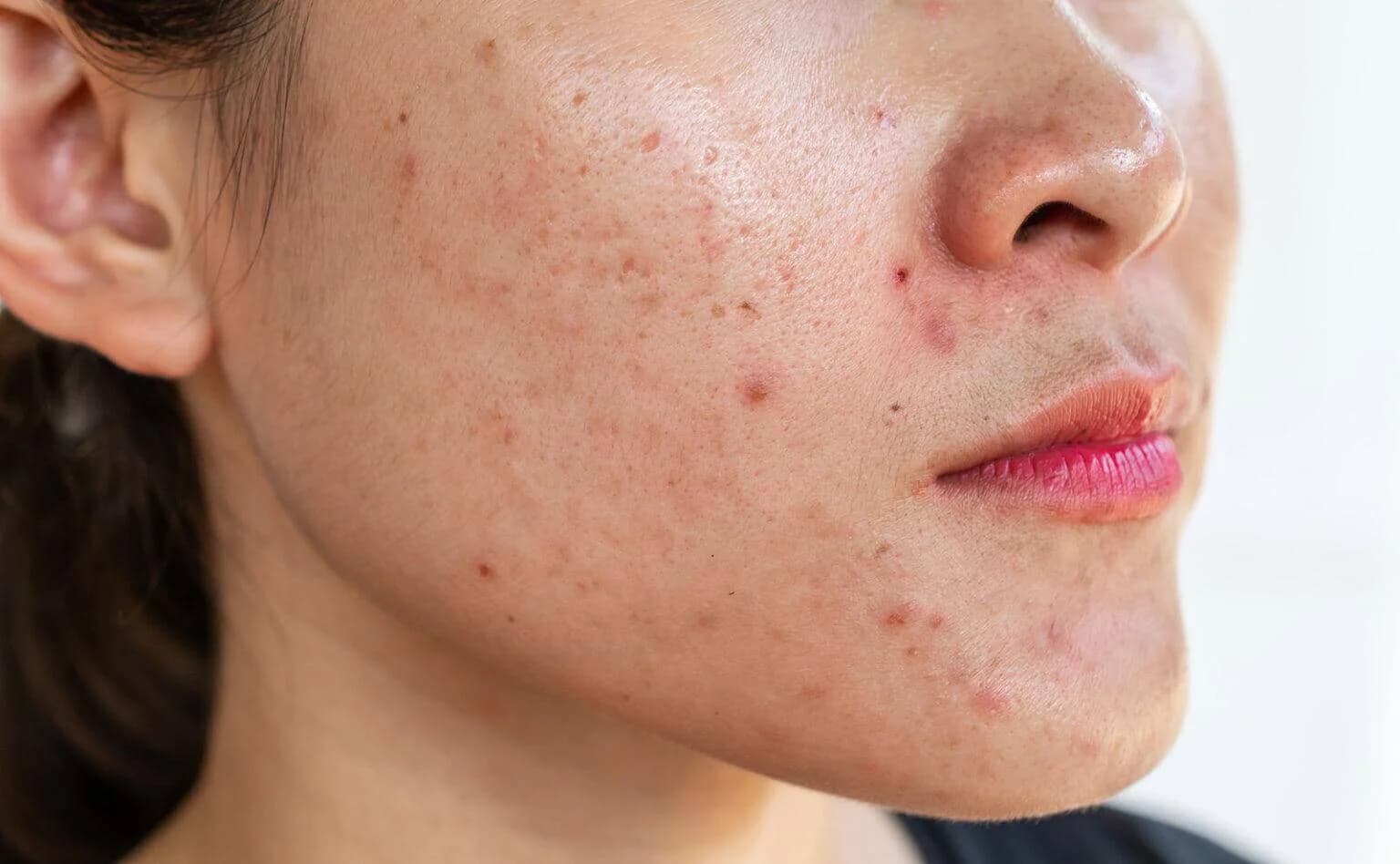
Comparing prescription acne treatments can feel overwhelming, especially when two topical medications seem similar at first glance. Epiduo Gel and Duac Once Daily Gel are two widely prescribed combination treatments used to treat mild to moderate acne vulgaris.
Although both medications contain benzoyl peroxide, they combine it with completely different secondary agents. Epiduo combines it with adapalene (a topical retinoid), whereas Duac combines it with clindamycin (a topical antibiotic).
This difference affects how each medication works, how it’s used and how long it’s typically prescribed for. It also plays a part in how a healthcare professional evaluates which option is most suitable for your skin.
Key takeaways
Different secondary active ingredients: Both gels contain benzoyl peroxide, which helps to kill acne-causing bacteria, but Epiduo adds adapalene (a retinoid to unclog pores), while Duac adds clindamycin (an antibiotic to reduce bacterial growth and inflammation).
Treatment duration differs: Duac contains an antibiotic, and therefore shouldn’t be used continuously for more than 12 weeks to help prevent bacterial resistance. Epiduo has no set limit but a prescriber will review your progress.
Don’t combine them unless advised: Both gels contain benzoyl peroxide, so applying Epiduo and Duac at the same time can cause severe skin dryness, peeling, and irritation without providing added benefit.
Prescription-only: Both Epiduo and Duac require a clinical assessment and prescription from a healthcare professional or a registered UK pharmacy service like Quick Meds.
Epiduo vs Duac: comparison at a glance
Feature | Epiduo (Gel) | Duac (Gel) |
|---|---|---|
Active ingredients | Adapalene + Benzoyl Peroxide | Clindamycin + Benzoyl Peroxide |
Type of active ingredients | Topical Retinoid + Benzoyl Peroxide | Topical Antibiotic + Benzoyl Peroxide |
Format | Topical gel | Topical gel |
Available strengths | • Epiduo (0.1% Adapalene / 2.5% Benzoyl Peroxide) • Epiduo Forte (0.3% Adapalene / 2.5% Benzoyl Peroxide) | • Duac Once Daily 1% / 3% ( 1% Clindamycin/ 3% Benzoyl Peroxide) • Duac Once Daily 1% / 5% ( 1% Clindamycin/ 5% Benzoyl Peroxide) |
Application frequency | Once daily in the evening to entire affected areas, on clean, dry skin. | Once daily in the evening to the entire affected area, after gently cleansing and drying the skin. |
Minimum age limit | 9 years (Epiduo 0.1%/2.5%) or 12 years (Epiduo Forte). Quick Meds prescribes to patients aged 18 and over. | 12 years. Quick Meds prescribes to patients aged 18 and over. |
Treatment duration | No fixed maximum; determined by prescriber review | Continuous treatment should not exceed 12 weeks |
Prescription status (UK) | Prescription-Only Medicine (POM) | Prescription-Only Medicine (POM) |
What are the key differences between Epiduo and Duac?
The main differences are the ingredient each combines with benzoyl peroxide, the type of acne each is licensed for and how long each can be used continuously.
Active ingredients
Both gels rely on benzoyl peroxide to keep pores clear and kill bacteria. However:
Epiduo combines benzoyl peroxide (2.5%) with adapalene (0.1% or 0.3%), a third-generation synthetic retinoid.
Duac combines benzoyl peroxide (3% or 5%) with clindamycin (1%), a lincosamide antibiotic.
Both products come in standard and higher-strength variants (Epiduo Forte vs. standard Epiduo, and Duac 5% vs. Duac 3%). The higher strength is the same medicine with more of one ingredient, not a different medicine entirely.
How they work
Benzoyl peroxide acts against acne-related bacteria and helps loosen blocked pores.
Epiduo adds adapalene, which works deep inside the hair follicles to prevent dead skin cells from clumping together and helps stop pores becoming blocked.
Duac adds clindamycin, which focuses on suppressing inflammation and also slows the growth of acne-related bacteria.
Type of acne they’re used to treat
Epiduo is licensed for acne vulgaris where comedones (blackheads and whiteheads), papules and pustules are present. Duac is licensed for mild to moderate acne vulgaris, particularly inflammatory lesions. However the two overlap and neither treats only one type of spot. A clinician will consider your mix of lesions, severity and skin sensitivity when advising.
Treatment duration
Duac contains the topical antibiotic clindamycin and continuous use shouldn’t exceed 12 weeks. This helps limit the risk of antibiotic resistance. Epiduo does not contain an antibiotic and therefore doesn’t have the same fixed limit. Its duration is decided by the prescriber based on how your skin responds and can be safely prescribed for longer-term maintenance treatment to help keep acne under control.
Side effects
Both gels share the same common skin reactions during the first few weeks of use, including mild dryness, peeling, redness, and a light burning sensation.Both can also make the skin more sensitive to sunlight, so sun protection is advised with either. Their differing secondary ingredient adds little that's different on the skin so neither is classified as ‘gentler’.
Cost and availability
Both medications are Prescription-Only Medicines (POM) in the UK and therefore are only available after an assessment by a prescriber. At Quick Meds, Duac Once Daily 1%/3% gel starts from £22.95 for 30 g and £36.95 for 60 g, and Duac Once Daily 1%/5% gel starts from £24.95 for 30 g and £38.95 for 60 g.
Epiduo 0.1%/2.5% gel starts from £42.95 (60g) and Epiduo Forte 0.3%/2.5% gel from £44.94 (60g). All prices include the online consultation. Price varies by brand or generic, strength, pack size and delivery option so check the current price with your prescriber or pharmacy before ordering.
Is Epiduo more effective than Duac?
Both Epiduo and Duac are effective acne treatments, but neither can be declared "more effective" than the other. Both treatments demonstrate high success rates in clinical trials, but because they contain different classes of active ingredients, efficacy comes down to individual skin response and acne type.
Clinical trial data submitted for both products shows:
Duac Gel achieves 42%-65% reduction in inflammatory spots over an 11-week treatment period.
Epiduo Gel achieves approximately a 51%- 56% reduction in total acne lesions, including 62% for inflammatory spots over a 12-week treatment period.
Both outperformed their individual ingredients and a placebo gel. However the trials used different methods and patients so these figures shouldn’t be compared directly. Effectiveness is only one factor and a prescriber will consider your type of acne, skin sensitivity, side effects, age and how long treatment is intended to last.
How quickly do Epiduo and Duac work?
Neither treatment offers an overnight fix. Both require continuous daily application and improvement builds over time. Some may notice early changes within the first weeks, but the clinical trials measured results after 11-12 weeks.
Early on the skin can feel drier, redder or more irritated and some people may notice their acne seems worse before it improves. If irritation appears troublesome talk to your prescriber or pharmacist who can advise on moisturisers or applying the gel less often.
How do the side effects of Epiduo and Duac compare?
Epiduo and Duac cause similar skin reactions because both gels contain benzoyl peroxide. The differences come from their secondary ingredient and are mainly extra precautions rather than everyday side effects.
Shared side effects
Skin irritation: Dryness, redness, peeling and a burning sensation at the application site are common especially in the first few weeks.
Bleaching: Both gels can bleach or discolor hair, clothing, towels, and bedding. Care should be taken when applying the gel and hands should be washed thoroughly with soap after application.
Sun and UV: Both treatments increase your skin’s vulnerability to ultraviolet (UV) radiation. Avoid sunbeds, direct sunbathing, and apply a broad-spectrum, oil-free sunscreen daily.
Differences in side effects
Epiduo (Adapalene): Irritation typically peaks in the first week and then then settles. It should not be used in pregnancy and shouldn’t be applied to broken, eczematous or sunburned skin.
Duac (Clindamycin):Due to the antibiotic element, Duac carries a precaution for people with a history of inflammatory bowel disease or antibiotic-associated colitis. Diarrhoea and colitis are rarely reported, but if prolonged diarrhoea or stomach cramps occur then you should stop using it and seek advice.
Managing irritation
To manage early skin dryness:
Wash with a gentle, non-medicated cleanser and dry your skin before applying a thin layer. Applying more won't improve results and can increase irritation. .
Apply an oil-free, non-comedogenic moisturiser.
If severe dryness or redness occurs, your clinician may recommend applying the gel every alternate night until your skin adapts.
Avoid other drying, exfoliating or irritating products while your skin settles
For full side effect details, always consult the Patient Information Leaflet (PIL) included inside your medication box.
How does a prescriber choose between Epiduo and Duac?
There is no single rule. When you complete an online consultation, a qualified clinician evaluates several personal health factors before approving a prescription.
Your acne type and severity
Your prescriber will assess your skin to decide which treatments suit your acne.
If you have mostly blackheads and whiteheads: Your prescriber may consider Epiduo, as adapalene actively prevents pores from clogging.
If you have many inflamed red spots: Your prescriber may select Duac to utilise clindamycin’s targeted antibacterial and anti-inflammatory properties.
If your acne is severe, nodular, or causing deep scars: Your prescriber may determine that topical treatments alone are insufficient, recommending oral acne medications or referral to a consultant dermatologist.
How your skin tolerates acne treatments
If you’ve had significant dryness or irritation with topical acne treatments: Your prescriber may take this into account when choosing a product and strength and may advise how often to apply it
If you’ve previously not tolerated a retinoid such as adapalene or clindamycin or another topical antibiotic: your prescriber will weigh that against the relevant product.
If you have a history of severe eczema or extremely reactive skin: Your prescriber will consider this carefully and may recommend introducing treatment slowly (e.g., alternate nights) or selecting a lower-strength formulation (such as Duac 3%).
Neither treatment should ever be applied to broken or irritated skin and sunburn should settle first before applying.
Whether Epiduo or Duac is unsuitable for you
Pregnancy and breastfeeding: Epiduo isn’t used in pregnancy or when planning a pregnancy. Duac is prescribed in pregnancy only after a careful risk/benefit assessment by the doctor. During breastfeeding, either can be considered, but neither should be applied to the chest.
Allergies: Both contain benzoyl peroxide, so an allergy to it affects both. Duac is also unsuitable if you’re allergic to clindamycin or lincomycin, and Epiduo if you’re allergic to adapalene or any of its other ingredients.
Gastrointestinal history: If you’ve had Crohn’s disease, ulcerative colitis or antibiotic-associated colitis, Duac is used with caution.
Recent antibiotic use: If you have recently used oral or topical antibiotics, your prescriber may avoid Duac to prevent bacterial resistance.
Can you use Epiduo and Duac together?
Epiduo and Duac generally aren’t used together unless a prescriber specifically recommends it. Both are combination acne treatments, and both already contain benzoyl peroxide.
Using both together would mean applying benzoyl peroxide from two prescription gels, which is likely to increase irritation such as redness, dryness, peeling and burning. If a prescriber does consider combining treatments, the decision would be based on your acne, what you’re currently using and how well your skin tolerates it. If you’ve been prescribed one and wonder whether to add the other, ask your prescriber rather than doing it yourself.
Other products to be careful with
Check with your prescriber or pharmacist before using these alongside either gel, as they can add to irritation:
Other topical retinoids (such as tretinoin like Treclin, or adapalene products like Differin). Epiduo already contains adapalene, and other retinoids shouldn’t be used with it at the same time. With Duac, a prescriber may advise using a retinoid at a different time of day.
Exfoliating or abrasive products, such as salicylic or glycolic acid products and facial scrubs.
Strongly drying products, including alcohol-based toners and astringents.
Other topical antibiotics. Duac shouldn’t be used with erythromycin-containing products.
Can you switch between Epiduo and Duac?
Yes. A prescriber may recommend switching if your current treatment hasn’t worked well enough, is causing troublesome side effects, or is no longer suitable for you. The decision should be prescriber-led rather than something you do yourself.
Switching from Duac to Epiduo: Duac contains an antibiotic, continuous treatment shouldn’t exceed 12 weeks. If you still need treatment after that, a prescriber may consider Epiduo, which has no fixed maximum duration. How long you use it is decided by your prescriber.
Switching from Epiduo to Duac: If Epiduo hasn’t worked well enough, a prescriber may consider Duac. Because it contains an antibiotic, they’ll look at how long it would be used and whether you’ve recently used antibiotics, particularly clindamycin or erythromycin, which can make resistant bacteria more likely.
Switching due to lack of results: If one gel isn’t improving your acne enough, your prescriber may consider the other. For example, they may look again at your mix of blackheads and inflamed spots. The two overlap, so a switch isn’t automatic.
Switching because of side effects: Both gels contain benzoyl peroxide, so switching may not solve dryness, redness or peeling. Your prescriber may first suggest a non-comedogenic moisturiser, applying less often, or a short break. A switch is more likely when something else changes, such as an allergy to an ingredient or pregnancy, which rules out Epiduo.
Where to buy Epiduo and Duac
Both Epiduo and Duac are prescription-only medicines in the UK, so they can only be supplied after a prescriber has assessed you. They can be prescribed by your GP or dermatologist, or through a registered online pharmacy such as Quick Meds.
At Quick Meds, you complete an online acne consultation covering your skin, medical history and other medicines. A UK-registered clinician reviews it to decide whether treatment is suitable and safe for you. If a prescription is appropriate, it’s dispensed by our GPhC-registered pharmacy and delivered in plain, discreet packaging. Quick Meds prescribes to patients aged 18 and over.