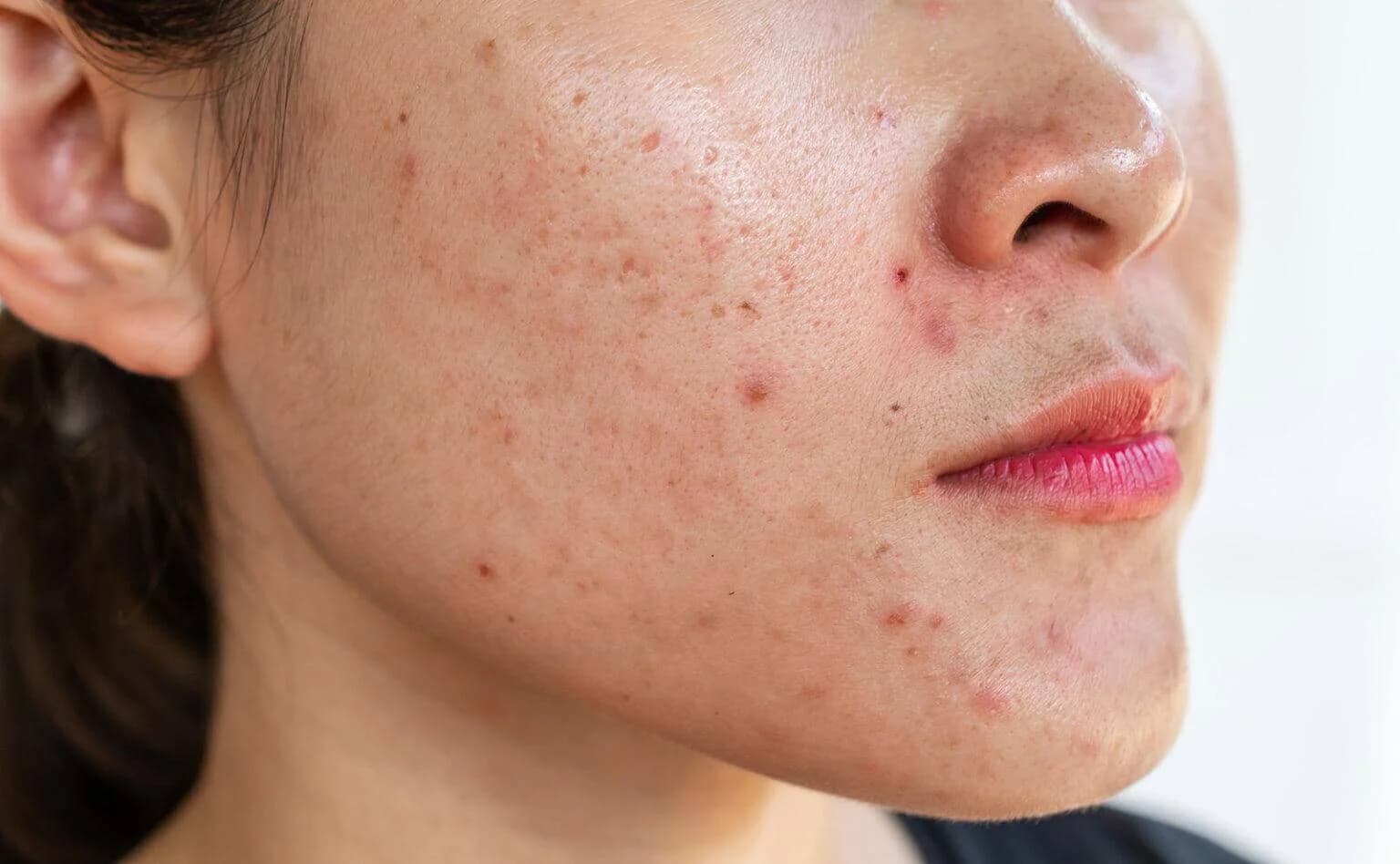
Epiduo and Differin are closely related prescription-only acne gels which both contain adapalene, a retinoid that helps unblock pores. The main difference is that Epiduo combines adapalene with benzoyl peroxide, which adds an antibacterial action, while Differin contains adapalene alone. A prescriber may choose Differin where acne is mainly blackheads and whiteheads whereas Epiduo may be the preference where inflamed red spots are also present, although the two do overlap. This guide compares their ingredients, effectiveness, side effects and suitability to help you understand how a prescriber may choose between them.
Key takeaways
Shared base with one key difference: Both gels contain adapalene, a retinoid. Additionally Epiduo contains benzoyl peroxide, which kills acne-causing bacteria and helps loosen dead skin cells, while Differin contains adapalene alone.
Epiduo outperformed adapalene alone in trials: In clinical trials, combining adapalene with benzoyl peroxide (Epiduo) achieved greater lesion reduction than using adapalene alone.
Irritation is common with both: Dryness, redness and burning are listed as common side effects of each gel, so neither can be classified as ‘the gentler option’.
Don’t use them together unless advised: Both contain adapalene, and both advise against using other retinoids at the same time.
Switching is possible: A prescriber may suggest switching if one isn’t working well enough or isn’t tolerated, but irritation is common with both, so a switch won’t always resolve this.
Differin vs Epiduo: comparison at a glance
Feature | Differin | Epiduo |
|---|---|---|
Active ingredient(s) | Adapalene | Adapalene + Benzoyl Peroxide |
Available formats | Gel and Cream | Gel only |
Available strengths (UK) | Differin (0.1% Adapalene) | Epiduo (0.1% Adapalene / 2.5% Benzoyl Peroxide) Epiduo (0.3% Adapalene / 2.5% Benzoyl Peroxide) |
Minimum licensed age | 12 years and over QuickMeds prescribes to patients aged 18 and over. | 9 years (Epiduo 0.1%) or 12 years (Epiduo 0.3%). QuickMeds prescribes to patients aged 18 and over. |
Application frequency | Once daily in the evening, after washing and drying the skin | Once daily in the evening to the entire affected area, after gently cleansing and drying the skin. |
UK prescription status | Prescription-Only Medicine (POM) | Prescription-Only Medicine (POM) |
What are the key differences between Differin and Epiduo?
Differin and Epiduo differ mainly in their ingredients, how they work, their side effects and their cost.
Active ingredients
Differin contains adapalene alone, a retinoid, at 0.1% as a gel or cream. Epiduo is a gel combining 0.1% adapalene with 2.5% benzoyl peroxide. Epiduo Forte contains a higher concentration of adapalene (0.3%) with the same 2.5% benzoyl peroxide. It’s the same combination medicine at a higher adapalene strength used for resistant acne but is not a different drug.
How they work
Both medicines use adapalene, which helps stop dead skin cells blocking pores and has an anti-inflammatory effect. Benzoyl peroxide does a different job: it kills acne-causing bacteria and helps loosen dead skin. Epiduo combines the two, so it works on blocked pores and bacteria together, while Differin works through adapalene alone. Both are licensed for acne with blackheads, whiteheads and inflamed spots, so the difference is the approach rather than the type of spot.
Side effects
Both medicines commonly cause dryness, redness, burning and irritation where applied, usually mild to moderate and most noticeable early in treatment. Epiduo also contains benzoyl peroxide and comparative clinical studies indicate that local irritation is generally higher with Epiduo, especially in the opening week. Neither product is entirely "gentle" and both advise minimising sun and UV exposure.
Cost and availability
Both are prescription-only medicines in the UK and can’t be bought over the counter. At QuickMeds, Differin 0.1% gel (50g) starts from £28.95, Epiduo 0.1%/ 2.5% gel (60g) from £42.95, and Epiduo 0.3%/ 2.5% gel (60g) from £44.94, with all prices including the online consultation. Price varies by brand or generic, strength, pack size and delivery option so check the current price with your prescriber or pharmacy before ordering.
Is Epiduo more effective than Differin?
In clinical trials, Epiduo was generally more effective than adapalene alone, but that doesn’t make it the better choice for everyone. Differin contains adapalene on its own, and Epiduo’s prescribing information reports two 12-week trials comparing the combination with adapalene alone, benzoyl peroxide alone and a placebo gel. Across both trials, compared with adapalene alone:
Feature | Adapalene + Benzoyl peroxide | Adapalene |
|---|---|---|
Success (clear/almost clear) | 29.4% | 18.7% |
Median % Reduction in
Inflammatory lesion count | 62.1% | 50% |
|---|---|---|
Non-inflammatory lesion count | 52.8% | 45% |
Total lesion count | 54.8% | 44% |
The trials tested adapalene alone rather than the branded Differin by name. While these figures show clear therapeutic advantages for Epiduo, effectiveness is also only one factor. A prescriber considers how your skin tolerates treatment, your type of acne, what you’ve tried before and your individual suitability.
How quickly do Differin and Epiduo work?
Neither is a quick fix. Both are ongoing daily treatments requiring daily application and improvement builds over weeks. Epiduo’s prescribing information says early signs of improvement usually appear within 1 to 4 weeks, and its trials measured results at 12 weeks. Early on, skin can feel dry, red or irritated, and some people notice their acne seems worse before it improves. If irritation is troublesome, speak to your prescriber or pharmacist.
Which is better for different types of acne: Differin or Epiduo?
Differin is licensed for mild to moderate acne where comedones, papules and pustules predominate. Epiduo is licensed for acne vulgaris where comedones, papules and pustules are present. As both these uses overlap, neither is limited to one type of spot, and a prescriber looks at the whole picture:
Type of acne: A prescriber may consider Differin where blackheads and whiteheads are the main feature, and Epiduo where inflamed, red spots are present too, but either can be used for both.
Previous treatment: How you’ve responded to retinoids or benzoyl peroxide before can guide the choice.
Skin tolerability: Both commonly cause dryness and irritation, so neither is automatically the gentler option.
Other products: Drying or irritant cosmetics, and other retinoids or benzoyl peroxide products, can add to irritation.
Which is best for severe acne?
Differin’s prescribing information says it shouldn’t be used in severe acne. Epiduo’s does not state a limit, but says its benefit in nodular acne hasn’t been established. That doesn’t make Epiduo the best option for severe acne. Severe, painful, cystic or scarring acne often needs a different approach, such as combination treatment or specialist referral, depending on your symptoms. If your acne is severe, painful or leaving scars, see your GP or a dermatologist for a proper assessment.
When might Differin or Epiduo be considered?
Your prescriber will weigh your acne, previous treatment history and how your skin previously tolerated them as well as personal preferences.
A prescriber may consider Differin if:
Your acne is mild to moderate and consists mainly of blackheads and whiteheads.
You prefer a cream rather than a gel, as Differin is available as both whereas epiduo is gel only.
You are looking for a lower-cost initial prescription treatment.
A prescriber may consider Epiduo if:
You have inflammatory red spots as well as blackheads and whiteheads.
Previous single-ingredient treatments have failed to control breakouts.
You have oilier skin (Epiduo's gel format suits oilier skin)
[Start your acne treatment consultation]
Does Epiduo cause more side effects than Differin?
Yes, slightly more in some trials, but not by much. In clinical trials comparing Epiduo with adapalene alone, skin tolerability was similar, although in the larger trial side effects overall were more frequent with Epiduo, mainly because of more mild-to-moderate dry skin early in treatment.
Both gels commonly cause dryness, irritation, burning and redness, and Epiduo also lists scaling and irritative contact dermatitis as common, while Differin’s has them as uncommon. For most people the irritation is mild to moderate and settles as treatment continues. With Epiduo it typically peaks in the first week, and in trials side effects occurred early and were temporary. Both advise minimising sun and UV exposure, and because Epiduo contains benzoyl peroxide it can also bleach hair and coloured fabrics, so it should be kept away from towels, bedding and clothing and hands must be washed after applying.
A non-comedogenic moisturiser can help with dryness, and if irritation is troublesome your prescriber or pharmacist can advise on applying the gel less often or taking a short break. Speak to a healthcare professional if irritation is severe or doesn’t settle, or if you develop blistering or a burning reaction.
Who should not use Epiduo or Differin?
These gels may not be suitable for everyone and should only be used after a prescribers assessment. They will check for the following:
Known allergies: Do not use it if you have a confirmed allergy to adapalene, benzoyl peroxide, or any additional excipients.
Pregnancy: Neither gel should be used during pregnancy or when planning a pregnancy. If you become pregnant while using either, discontinue immediately and speak to your prescriber.
Breastfeeding: To be used with caution, discuss with your prescriber.
Damaged skin: Neither gel should be applied to cuts, grazes, eczema or sunburned skin, or near your eyes, lips, mouth or nostrils.
Sun and UV: Both advise avoiding excessive sun and UV exposure, and sunburn is listed as a side effect. Avoid sunbeds, and use sunscreen (as a general guide, SPF 30 or higher) and protective clothing in strong sun.
Bleaching (Epiduo): Because Epiduo contains benzoyl peroxide, it can bleach hair and coloured fabrics. Keep it away from towels, bedding and clothes, and wash your hands after applying.
Stop using the gel and speak to a healthcare professional if you have severe irritation or a reaction that suggests an allergy, such as a spreading rash, blistering or a burning reaction. Seek urgent medical help (999 or A&E) for swelling of the face or eyelids, throat tightness or difficulty breathing.
For the full list of warnings and contraindications, read the patient information leaflets for Differin and Epiduo.
[View all acne treatments]
Can you use Differin and Epiduo together?
No, they shouldn’t be used together unless a prescriber specifically directs it. Both contain adapalene, so using both would mean doubling up on the same retinoid, and both advise against using other retinoids at the same time. It won’t clear acne faster, and excessive use can cause marked redness, peeling and discomfort. Epiduo also contains benzoyl peroxide, so it shouldn’t be combined with other benzoyl peroxide containing products either. If you’ve been prescribed one and wonder about adding or switching to the other, ask your prescriber first.
What not to combine with
When using either Differin or Epiduo, avoid layering other active skincare ingredients unless explicitly directed by your clinician:
Other topical retinoids (such as tretinoin or other prescription retinoid products).
Exfoliating acids, including salicylic acid and glycolic acid which can add to irritation .
Abrasive cleansing scrubs, brushes, or alcohol-based toners or astringents.
Benzoyl peroxide products with Epiduo, since it already contains benzoyl peroxide. With Differin, a prescriber may sometimes pair it with benzoyl peroxide, for example in the morning, but that’s their decision.
If you use cosmetics, choose non-comedogenic, non-astringent ones.
Can you switch between Differin and Epiduo?
Yes. A prescriber may switch you from one to the other if your acne isn’t improving enough, if one isn’t suiting your skin, or if your circumstances change. A prescriber or pharmacist should guide any change to ensure the transition is managed safely. Neither product has a requirement for a washout period between the switch.
From Differin to Epiduo: After around three months on Differin, a prescriber may suggest Epiduo if inflamed spots remain a problem, because it adds benzoyl peroxide, which acts against acne-related bacteria. In trials, Epiduo reduced inflamed spots more than adapalene alone.
From Epiduo to Differin: A prescriber may suggest this if you react to benzoyl peroxide, for example with an allergic-type skin reaction. Because both gels commonly cause dryness and irritation, switching won’t always help with irritation. You may also lose some of the extra benefit benzoyl peroxide provides on inflamed spots
Where to buy Differin and Epiduo?
Both Epiduo and Differin are prescription-only medicines in the UK, so they can only be supplied after a prescriber has assessed you. They can be prescribed by your GP or dermatologist, or through a registered online pharmacy such as QuickMeds.
At QuickMeds, you complete an online acne consultation covering your skin, medical history and other medicines. A UK-registered clinician reviews it to decide whether treatment is suitable and safe for you. If a prescription is appropriate, it’s dispensed by our GPhC-registered pharmacy and delivered in plain, discreet packaging. QuickMeds prescribes to patients aged 18 and over.
[Start your acne treatment consultation]