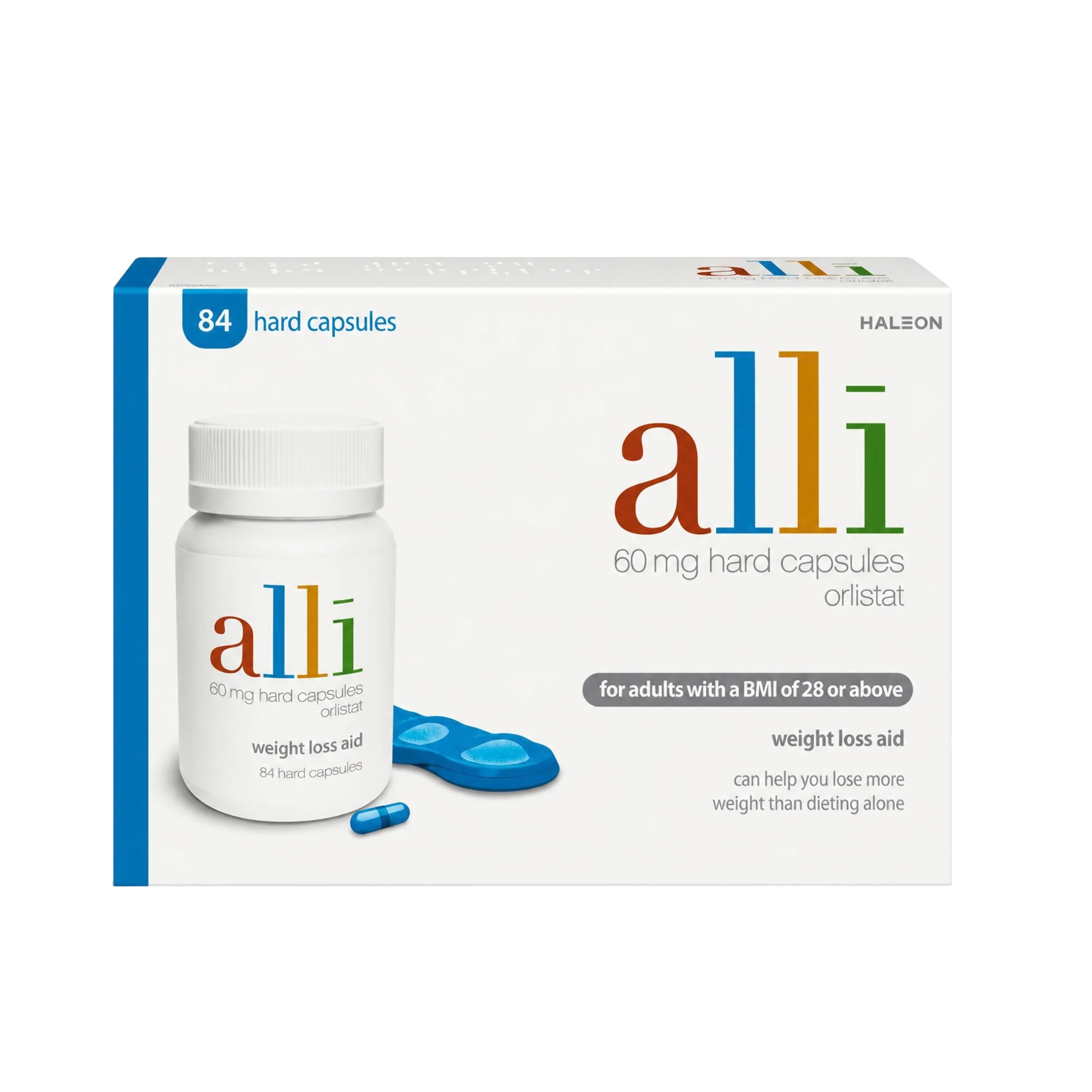
Alli 60mg Capsules
Alli 60mg Hard Capsules (Orlistat)
Alli 60mg hard capsules contain orlistat, an anti obesity medicine designed to support weight loss in adults aged 18 and over who are overweight and have a BMI of 28 or above. Alli should be used alongside a reduced calorie, low fat diet.
How Alli Works
The active ingredient, orlistat, works locally in your digestive system to reduce the amount of fat your body absorbs from food. It prevents around one quarter of the fat in your meals from being absorbed, allowing this undigested fat to pass naturally from the body in your stools. Because Alli affects the way dietary fat is handled by your body, following a low fat diet is an important part of treatment. A balanced, reduced calorie diet can also help you manage the effects of the medicine and support your weight loss efforts.
Dosage
For adults aged 18 and over:
Take one capsule, three times a day.
Take alli just before, during, or up to one hour after meals.
This usually means one capsule at breakfast, lunch, and dinner.
Make sure your three main meals are:
Well balanced
Reduced calorie
Lower in fat
If you miss a meal or your meal contains no fat, do not take a capsule.
Swallow the capsule whole with water.
Do not take more than 3 capsules a day.
Eat low fat meals to reduce the chance of diet related treatment effects.
Try to become more physically active before starting alli.
Physical activity is an important part of a weight loss programme.
Check with your doctor first if you have not exercised before.
Continue to be active while taking alli and after you stop taking it.
Always read the patient information leaflet before use and follow the dosage and dietary advice provided.
Ingredients
Active Ingredient: Orlistat 60mg.
Other Ingredients:
Capsule filling: microcrystalline cellulose (E460), sodium starch glycolate, povidone (E1201), sodium laurilsulfate, talc.
Capsule shell: gelatin, indigo carmine (E132), titanium dioxide (E171), sodium laurilsulfate, sorbitan monolaurate, black ink (shellac, iron oxide black (E172), propylene glycol).
Capsule band: gelatin, polysorbate 80, indigo carmine (E132
Warnings
Do not take:
if you are allergic to any of the ingrdients.
if you under 18 years old.
if your BMI is under 28.
if you are pregnant or breast-feeding.
if you are taking ciclosporin.
if you are taking warfarin or other medicines used to thin the blood.
if you have cholestasis (liver disorder).
if you have problems absorbing food (chronic malabsorption syndrome) diagnosed by a doctor
Talk to your doctor or pharmacist before taking alli if:
You have diabetes
You have kidney disease
You are taking any other medicines such as ciclosporin, warfarin or blood thinning medicines.
Talk to your doctor before taking alli if you take:
Amiodarone for heart rhythm problems
Acarbose for type 2 diabetes
Levothyroxine or other thyroid medicine
Epilepsy medicines
HIV medicines
Medicines for depression, anxiety, or other psychiatric conditions
Medicines for high blood pressure
Medicines for high cholesterol
Birth Control
Severe diarrhoea caused by alli may make the oral contraceptive pill less effective.
If you have severe diarrhoea, use an additional method of contraception.
Vitamins
alli can reduce the absorption of some vitamins.
Take a multivitamin every day containing vitamins A, D, E and K.
Take the multivitamin at bedtime, when you are not taking alli.
You can take alli:
Just before a meal
During a meal
Up to 1 hour after a meal
Swallow the capsule with water.
If you skip a meal or the meal contains no fat, do not take alli.
Avoid high-fat meals because they can increase the chance of side effects.
Do not take more than the recommended dose, even after a high-fat meal.
Side Effects
Like all medicines, alli can cause side effects, although not everyone gets them.
Common effects, these are often caused by the way alli works. Eating lower-fat meals can help reduce them.
Very common (more than 1 in 10 people):
Wind, sometimes with oily spotting
Sudden need to have a bowel movement
Oily or fatty stools
Soft stools
Common (up to 1 in 10 people):
Stomach pain
Loss of bowel control (stool leakage)
Diarrhoea or runny stools
More frequent bowel movements
Anxiety
Speak to your doctor or pharmacist if these effects become severe or troublesome.
Serious side effects:
Severe allergic reaction:
Difficulty breathing
Sweating
Rash or itching
Swelling of the face
Fast heartbeat
Fainting or collapse
Stop taking alli and get medical help immediately.
Other serious side effects include:
Bleeding from the rectum
Diverticulitis: inflammation of the large intestine, which may cause lower abdominal pain, fever or constipation
Pancreatitis : severe abdominal pain that may spread to the back, sometimes with fever, nausea or vomiting
Severe skin blistering
Severe stomach pain caused by gallstones
Hepatitis, liver inflammation, which may cause:
Yellow skin or eyes
Itching
Dark urine
Stomach pain
Pain under the right side of the ribs
Loss of appetite
Oxalate nephropathy, a build-up that can cause kidney stones
Stop taking alli and contact your doctor if you experience any of these serious side effects.
Changes in blood tests
The frequency of these effects is unknown:
Increased levels of certain liver enzymes
Changes in blood clotting in people taking warfarin or other blood thinners
Storage
Keep out of the sight and reach of children.
Do not use this medicine after the ‘EXP’ date shown on the pack.
Store below 25ºC. Protect from sunlight.
Frequently Asked Questions
Everything you need to know